
Whitepapers/ Reports
2026 AI for Recruitment – Whitepaper
How to use AI the right way in recruiting in 2026 to speed hiring, improve response rates, and reduce no-shows.

Recruiters should be clear about the roles they want to fill, the formats for job ads, and the factors they will use to choose the best candidates. Teams may be looking to fill immediate positions, but part of their recruitment strategy is building long-term relationships with bright people looking for work. For instance, a candidate might not be right for the current job opening, but if they join a talent group, they’ll be the first to know about future jobs that better fit their skills.
In 2025, companies can hire good people by using different recruitment tactics that focus on improving their employer brand, using technology, and making the candidate experience suitable. Here are some methods that work:
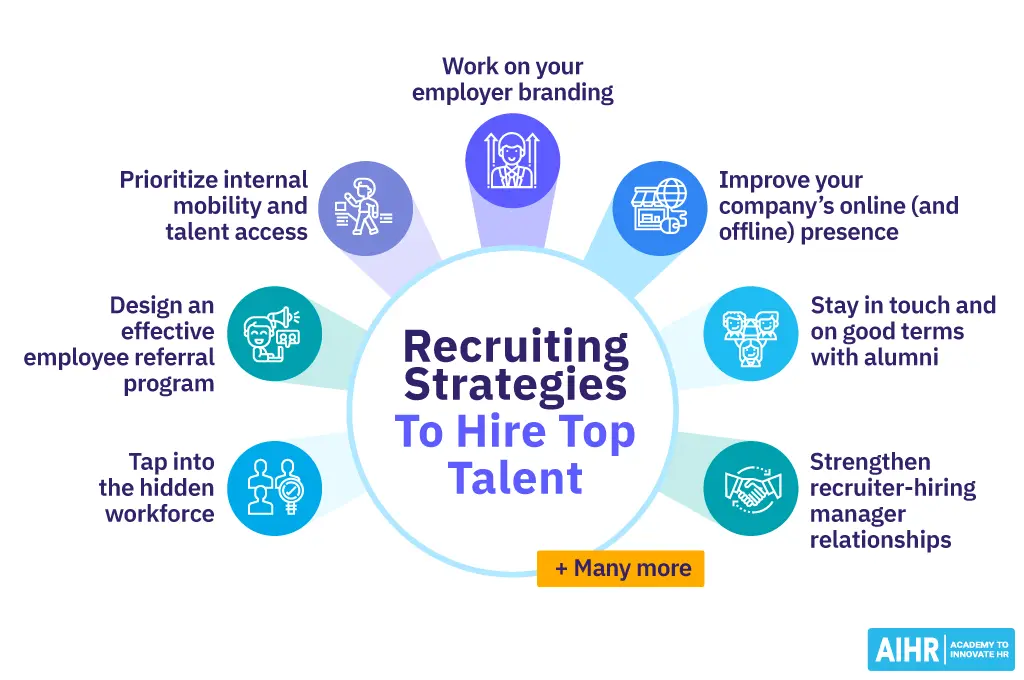
There are many advantages to using an employee referral program as (a component of) your hiring strategy, such as:
Establishing a successful referral program doesn’t have to be extremely difficult or costly. Just make sure that the following components are included in your program:
Incentives -Additional holidays or other benefits are also effective, but money is usually the best option. If you have the option, ask staff what they would prefer.
Keep it simple- Make sure your referral program is simple to use and comprehend.
Feedback: Employees who have referred someone should be informed of the referral’s progress.
Recognize and celebrate- Consider a creative method to honour staff members who have successfully referred someone in order to give them the credit they merit. This doesn’t have to be complicated; simply mentioning it in your internal newsletter can suffice.

Companies cannot merely rely on hiring personnel to cover gaps if they wish to remain competitive. This will continue to be crucial, but they must also concentrate on locating, releasing, and developing the potential.
Here, two key pillars are involved:
Your business’s image to prospective employers is known as your employer brand. When people are asked what it would be like to work for firm X or Y, their responses are a culmination of their various ideas.
Employee value proposition (EVP) and employer branding are closely related. The promise you make to your employees as an employer in exchange for their dedication is known as your EVP. It is the culmination of all the perks and compensation workers obtain from their company.
In addition to reflecting your EVP, a potent employer brand aids in hiring new employees. Candidates will find you more readily and apply organically if your brand is well-known. Lower recruiting expenses follow from this. Hiring expenses drop by 43% for businesses with a strong employer brand.
Similarly, a strong EVP increases employee pride in working for your organization and the likelihood that they will speak well of you. This can lead to more recommendations and positive employer branding for your company.

Your company’s online and offline presence reflects your brand identity, values, and caliber of your services or goods. It sets the tone for prospective applicants’ expectations and creates their initial impression.
Your career page, social media profiles, employer review websites, email campaigns, recruitment events, referral programs, and community involvement are all examples of your online and offline presence. A consistent online and offline presence represents your professionalism and increases your audience’s perception of your credibility.
Here are some suggestions for raising the visibility of your business:
Like advertising your goods or services to prospective clients, recruitment marketing involves utilizing various promotional strategies to draw attention to your company and job opportunities.
Among the tasks involved in recruitment marketing are:
Using recruitment marketing strategies can significantly impact the effectiveness of your hiring process. For instance, 75% of applicants report that the appearance and feel of a job advertisement affect their choice to apply, while job listings featuring videos have a 34% higher application rate. Businesses that employ specialized recruitment marketing platforms report hiring three times faster and with higher-quality candidates.
According to LinkedIn, passive applicants make up 70% of the worldwide workforce. Although they aren’t actively seeking a new position, these individuals may do so if the ideal opportunity arises. Getting passive applicants to join your talent pool is one approach to interacting with them. Regularly sending them pertinent, instructive material—for instance, that can advance their career—can be a great approach to remain in touch and build rapport. Building a talent pipeline for upcoming job opportunities is another method of sourcing passive talent; more on that in the section immediately below.
Recruiters use sourcing, a proactive hiring method, to find and build relationships with applicants, even if they are not actively looking for a job. The following three factors make sourcing an essential component of your company’s talent acquisition strategy:
The following advice may help you begin your candidate-sourcing process:
According to recruiters, about 20% of workers who left their employment during the pandemic have since returned to work for their previous companies.
Rehiring a previous employee has several benefits, such as:
Establishing a private LinkedIn or Facebook page (or both) for alums is a comparatively easy method of maintaining contact with former workers. You can post job openings and provide frequent updates about the company here. On Linkedin, there are more than 118,000 corporate alum groups.
Candidates’ prior experience plays a significant role in the effectiveness of recruitment tactics. For instance, the Candidate Experience Report from Gartner discovered that:
Interestingly, the same survey found that
To improve the recruitment experience at your company, you must first assess your present situation. Using a candidate experience survey is one method of doing this. You can take action based on the survey’s results.
In any event, the following components should be examined:
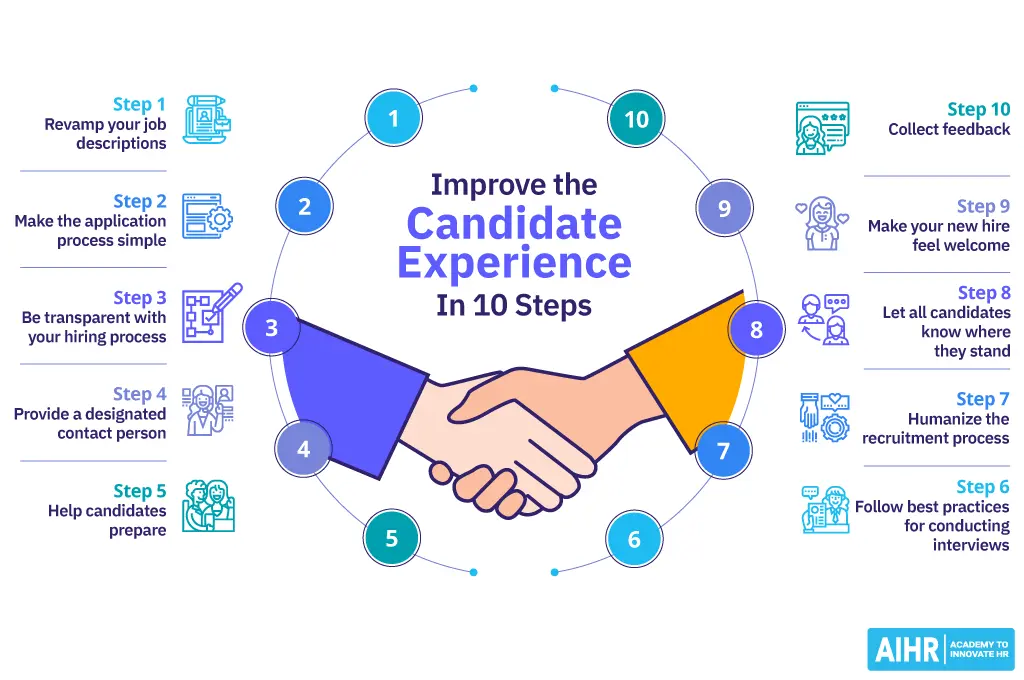
Building stronger ties between hiring managers and recruiters may not be the first thing to consider when considering innovative recruiting tactics.
However, the success of your company’s hiring efforts depends on the interaction between these two individuals. It boosts candidate satisfaction, recruiting speed, and quality.
The following guidelines should be considered:
You can get more done in less time by automating jobs that you do over and over, like going through resumes, setting up interviews, and sending follow-up emails. You can focus on tasks that are more important and useful. Putting your hiring process online can help you in many ways. One big benefit is that it speeds up and improves the way you hire people.
What are some ways you can automate the process of hiring people?
Skill-based hiring means putting a candidate’s skills and abilities ahead of traditional factors like schooling or job title. It gives you a better idea of whether a candidate is right for the job and lets you consider people from different backgrounds. Tests given before hiring are a fair way to see how skilled a person is. They ensure there are no biases, whether people know them or not. These tests should take the place of looking over resumes and happen before the first round of interviews. By using pre-hiring tests, companies can fairly assess skills and reduce bias in hiring decisions. But to take this a step further, advanced AI tools can streamline and enhance this process.
Maya AI is designed to improve the hiring process by making it more efficient and accurate. Using advanced algorithms, it helps companies find, screen, and engage with candidates quickly and effectively.
Key Features
Business Impact
Companies using Maya AI have seen measurable improvements:
Maya AI helps companies make better hiring decisions with greater efficiency and accuracy.
In conclusion, in 2025, successful hiring plans will depend on a multifaceted approach that puts an emphasis on building a strong company brand, using technology to your advantage, and making the candidate experience better. Companies should focus on making strong programs for employee referrals, encouraging internal movement, and using data-driven insights to improve the way they hire people. To get the best candidates, it will also be important to keep in touch with graduates, engage with passive candidates, and make the school more visible through marketing. Automation and AI-powered solutions, like those found in tools like Maya, can make the hiring process easier and lead to better candidates. By using these tactics, businesses can not only fill current job openings but also build a talent pool for future needs. This keeps them competitive in a job market that is always changing.
How to use AI the right way in recruiting in 2026 to speed hiring, improve response rates, and reduce no-shows.

Learn how insurance agencies can recruit better in 2026 by hiring faster, staying human, and improving results without sacrificing quality.